Adam is the CEO of Convergent Research. He is working with a large and growing network of collaborators and advisors to develop a strategic roadmap for future FROs. Outside of CR, he serves on the boards of several non-profits pursuing new methods of funding and organizing scientific research including Norn Group and New Science, and as an interviewer for the Hertz Foundation. Previously, he was a Schmidt Futures Innovation Fellow, a Fellow with the Federation of American Scientists (FAS), a research scientist at Google DeepMind, Chief Strategy Officer of the brain-computer interface company Kernel, a research scientist at MIT, a PhD student in biophysics with George Church and colleagues at Harvard, and a theoretical physics student at Yale. He has also previously helped to start companies like BioBright, and advised foundations such as the Open Philanthropy Project. His work has been recognized with a Technology Review 35 Innovators Under 35 Award (2018), a Fannie and John Hertz Foundation Fellowship (2010) and a Goldwater Scholarship (2008).
Team
PL Neuro is led by a small team and supported by an advisory board spanning neuroscience, neurotechnology, and AI.
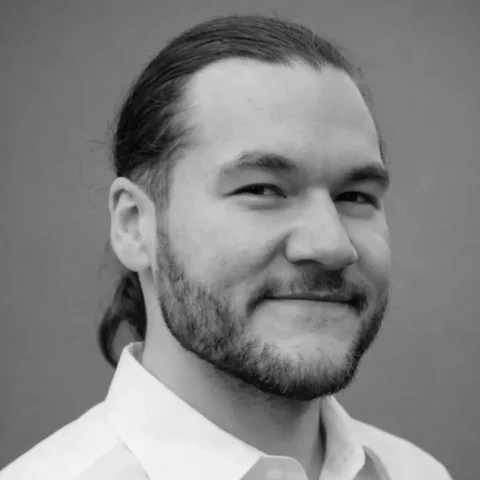
Juan Benet
Founder and CEO
Founder & CEO of Protocol Labs and GP of PLC Neurotech ; He is a frontier technology investor across neurotech, crypto, AI, and biotech.
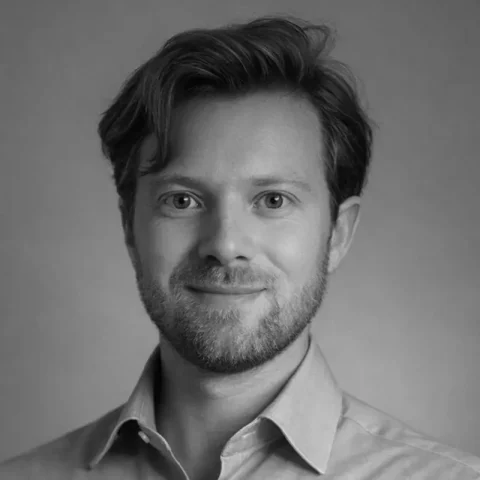
Sean Escola, M.D., Ph.D.
Chief Neuroscientist
Venture Partner of PLC Neurotech , former prof at Columbia, and former CEO of Herophilus; he invests in neuro, conducts computational neuroscience research, and is a psychiatrist.
Advisors
Adam Marblestone
CEO & Co-Founder, Convergent Research
David A. Markowitz
Chief Scientist, STR
David A. Markowitz is a scientist and engineer with over a decade of experience leading applied research in neuroscience, biotechnology, and computing. Previously, as an IARPA Program Manager, he designed and led moonshot research programs that delivered transformative capabilities for national security, commercial industry, and academic research. Prior to public service, David contributed advances in computational neuroscience and neural engineering as an academic research scientist. For this work, he was recognized with a 2019 Presidential Early Career Award for Scientists and Engineers (PECASE). He received his Ph.D. in Molecular Biology and Neuroscience from Princeton University as a DOE Computational Science Graduate Fellow and holds a degree in management from MIT.
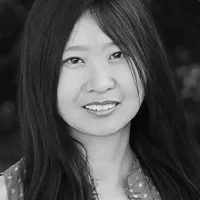
Doris Tsao
Chief Scientist for Neuro, Astera, Professor, University of California, Berkeley
Doris Tsao is the Chief Scientist for Neuro at Astera. Previously, she was a professor at UC Berkeley in the Neuroscience Department and a Howard Hughes Medical Institute Investigator. She is known for elucidating the anatomical anatomy and coding principles of the primate face-processing system and for demonstrating its integration into a broader map of object space. Her recent theoretical work proposes a topological account of how object representations emerge in the visual system. She now aims to build on these advances to develop a deeper understanding of perception and consciousness through large-scale, causal manipulation of neural circuits.
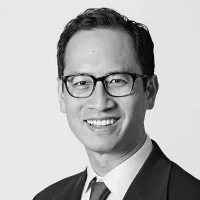
Eddie Chang
Professor & Chair, UCSF Neurosurgery, CEO, Echo Neurotechnologies
Dr. Edward Chang is a neurosurgeon who treats patients with epilepsy, brain tumors, and cranial nerve compression syndromes such as trigeminal neuralgia and hemifacial spasm. He is the Joan and Sanford Weill Chair of Neurological Surgery at the University of California, San Francisco. Dr. Chang specializes in advanced brain mapping methods to preserve crucial areas for speech and motor functions in the brain. He also has extensive experience with implantable devices that stimulate specific nerves to relieve seizure, movement, pain and other disorders. His research focuses on the brain mechanisms for speech, movement and human emotion. He co-directs the Center for Neural Engineering and Prostheses, a collaborative enterprise of UCSF and the University of California, Berkeley. The center brings together experts in engineering, neurology, and neurosurgery to develop state-of-the-art biomedical technology to restore function for patients with neurological disabilities such as paralysis and speech disorders. Dr. Chang earned his medical degree at UCSF, where he also completed a residency in neurosurgery. He was honored with the Blavatnik National Laureate for Life Sciences in 2015, in recognition of his contributions to deciphering the neural code of speech. Dr. Chang is the inaugural Bowes Biomedical Investigator at UCSF and HHMI Faculty Scholar. Dr Chang was inducted into the National Academy of Medicine in 2020 and the National Academy of Sciences in 2025.
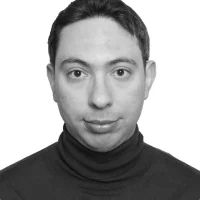
Greg Wayne
Distinguished Scientist, Google DeepMind
Greg Wayne, Ph.D is a Distinguished Scientist at Google DeepMind. Gregory co-authored a 2016 Nature paper developing neural networks with external memory and was awarded the prestigious MIT 35 under 35 award in the category of Inventor. His research has spanned neural architectures, humanoid motor control, long-term credit assignment in RL, semi-supervised learning with language-conditioned generative models, navigation, memory-augmented networks, electrosensory perception in the Mormyrid fish, and embodied language use in virtual robots. Since 2021, he has been leading Google's Project Astra, a multi-modal dialogue agent and research program to develop a "universal assistant", which one can learn more about on a recent episode of the Google DeepMind podcast with Hannah Fry.

Ilan Gur
Former CEO, ARIA
Ilan Gur recently finished his term as Founding CEO of the Advanced Research and Invention Agency. Previously, he was Founder and CEO of Activate.org, whose fellowship enables entrepreneurial scientists and engineers to transform their research into world-changing products and businesses. Gur received Ph.D., M.S., and B.S. degrees in Materials Science and Engineering from the University of California, Berkeley. He then founded two science based startups and served as Senior Advisor & Program Director at the U.S. Department of Energy’s Advanced Research Projects Agency, ARPA-E. He is a Schmidt Futures Innovation Fellow, an advisor to the Gordon and Betty Moore Foundation in support of the Moore Inventor Fellowship, and a judge for MIT Technology Review's TR35 award.
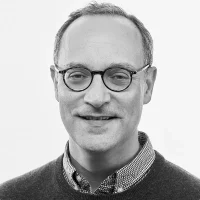
Matthew Botvinick
Technical Staff, Anthropic
Matthew Botvinick is a member of the technical staff at Anthropic, and former Senior Director of Research at Google DeepMind. His move into the AI industry in 2016 came after twenty years in academia, starting with a Ph.D. in the Neural Basis of Cognition from Carnegie Mellon University, followed by faculty positions at University of Pennsylvania and Princeton University. Botvinick has authored more than 150 peer reviewed articles, spanning AI, deep learning, reinforcement learning, cognitive science and computational neuroscience. He is Honorary Professor at the Gatsby Computational Neuroscience Unit at University College London and a Fellow of the Cognitive Science Society. Botvinick holds an M.D. degree from Cornell University with board certification in Psychiatry, as well as an M.A. in Art History from Columbia University. Alongside his work at Anthropic, he is currently a Resident Fellow at Yale Law School.
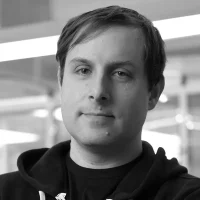
Max Hodak
Founder & CEO, Science Corporation
Max Hodak is the Founder and CEO of Science Corporation. Max founded the company in April of 2021 and leads its mission focused on restoring quality of life to those with debilitating conditions for which there are no treatment options, creating technology and devices aimed at restoring vision, cognition, and mobility. Science’s PRIMA retina implant for patients blinded with late stage macular degeneration (loss of central visual field) has completed pivotal clinical trials with over eighty percent of patients achieving significant visual acuity improvements, making it the first BCI technology to restore functional vision to these patients. PRIMA received U.S. FDA Breakthrough status in 2023 and is currently in the process of gaining both FDA and European approval. Science’s biohybrid BCI technology, which uses living neurons to connect to the brain instead of wires, circumvents the constraints of traditional neural interfaces and minimizes the damage done to the brain. Biohybrid technologies hold the potential to enable unprecedented new opportunities into restoring lost functionality due to brain injuries. The Science BCI Ecosystem provides state-of-the-art components and vertically integrated infrastructure for companies and institutions to build upon, with the aim of simplifying the effort required to gather and analyze neural data, and to help bring neuro research into the modern era. Prior to founding Science, Max was president of Neuralink, which he co-founded in 2016. He previously co-founded Transcriptic, a robotic cloud laboratory for the life sciences, where he was CEO. Max began his life-long passion for BCI as a young child and started programming at the age of six. As a freshman at Duke University’s Pratt School of Engineering, studying biomedical engineering, he worked his way into the renowned Nicolelis Lab – one of the best neural engineering labs in the country, typically open only to graduate students – and spent his undergraduate years immersed in BCI research. Since graduating from Duke, his primary research and professional focus has been on neural engineering and the brain. Decoding the human brain’s circuitry Gurney’s Resort in Montauk, New York April 17-19, 2026 Scaled human neural data towards a science of intelligence Summit Skywalker Ranch June 6-8, 2025